A-POST-OL — open-source platform for backend development

C++20 + PostgreSQL. Production since 2017. The platform powers projects across industries — e-commerce, fintech, ERP, IoT, AI services. Custom development for your specific requirements.

The core value

Data consistency

Business logic lives inside PostgreSQL itself: transactions, stock checks, price calculations, double-charge protection — atomic at the database level, no intermediate layers. Critical for e-commerce and financial operations. A similar approach to Supabase, but their logic is limited to RLS and edge functions — here all business logic is in PL/pgSQL.

And as a bonus — performance

A single event loop, async PostgreSQL with no threads or blocking calls — a consequence of the same architecture. Open benchmark:

507K RPS — 90% of Nginx speed → benchmark

Custom Development

Projects on the A-POST-OL platform built for individual customer requirements. Each project is an active system you can open and verify.

The platform architecture is universal

The platform fits any project that needs a reliable backend with built-in infrastructure. Apostol CSMS is just one example. Your project can be next.

E-commerce

Multi-tenant, multi-payment, country-based tax calculation (OSS), queues for marketplace integrations (Amazon, Shopify), audit log, oversell protection.

FinTech

Real-time data via WebSocket, OAuth 2.0, billing and reconciliation, audit log, exchange and payment integrations.

ERP / document workflow

Workflow engine (states, transitions, events), document management, reports, S3-compatible file storage, localization.

IoT and charging infrastructure

High load via single event loop, persistent WebSocket connections, OCPP/OCPI/MQTT, real-time telemetry processing.

AI services

Async tasks, queues for LLM APIs, file storage for inputs and results, usage-based billing, multi-tenant.

General-purpose SaaS

Authentication out of the box (OAuth 2.0, JWT, signup), tenant isolation, white-label, localization, audit log — everything a starting SaaS needs.

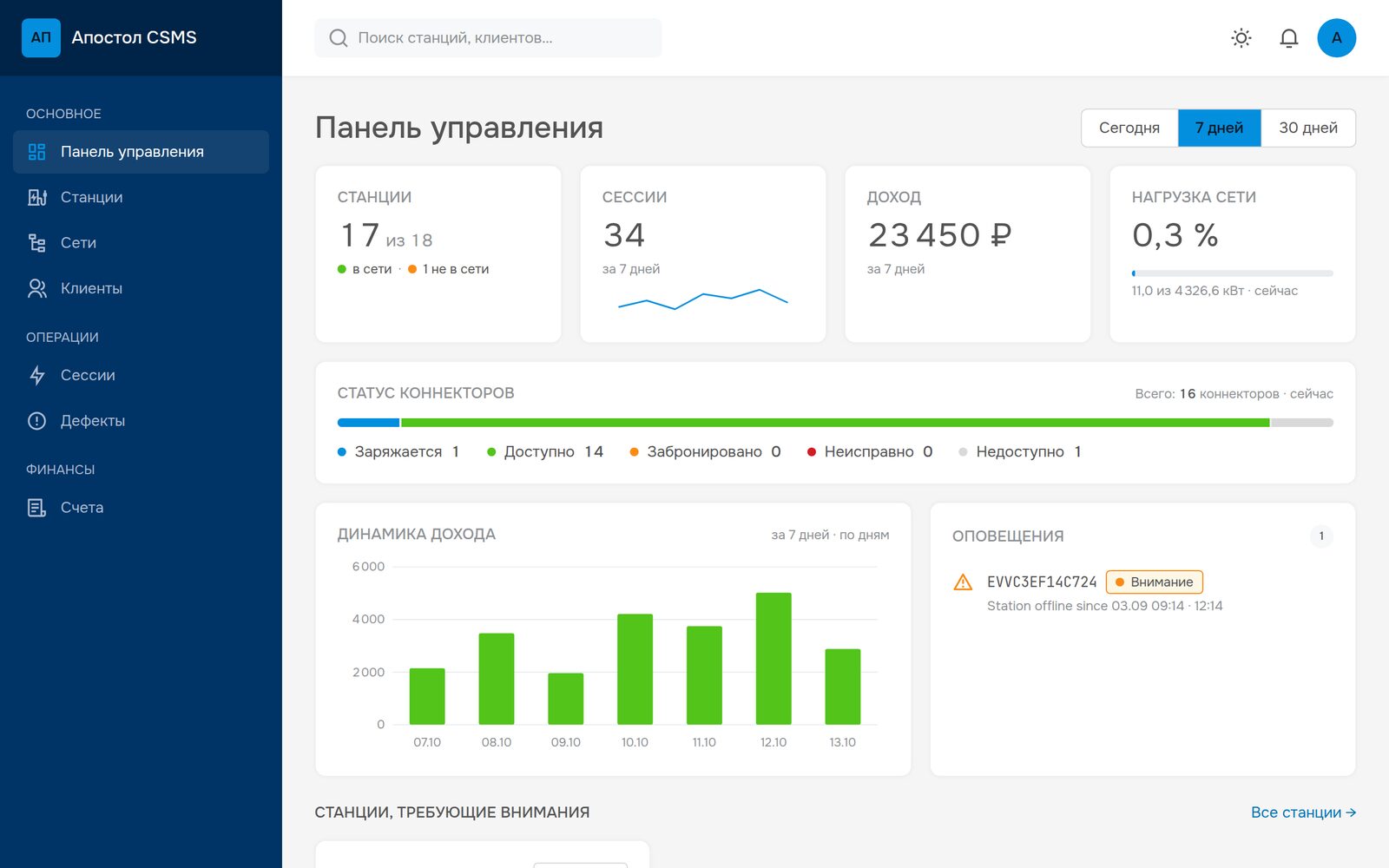
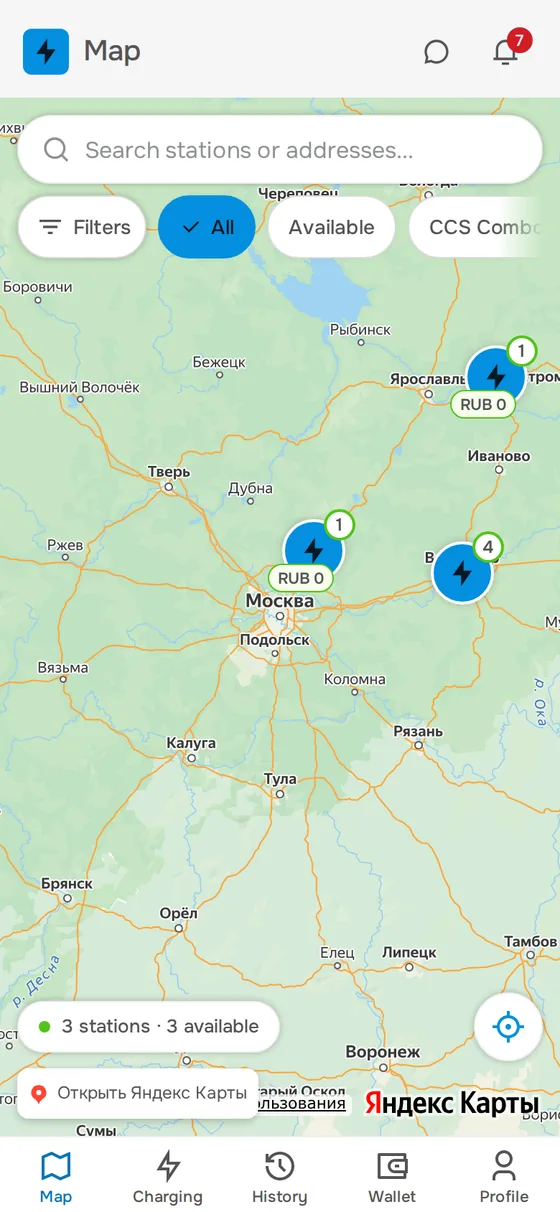
Apostol CSMS (EV charging infrastructure) is one example of a mature SaaS product on the platform. Same architecture, different domain.

Learn more about the platform architecture →

The platform — a three-layer toolkit

Same stack across seven production projects. Only the top layer — business logic — changes.

Layer 3

Configuration — your project

Apostol CSMSEV chargingCampus CORSGNSSTalking To AIAIDEBT-MasterFinanceCopyFrogAIPlugMeEV chargingShip Safety ERPMaritime

Unique business logic. Everything that makes CSMS different from an ERP lives in this layer.

Extends the platform. Never modifies it.
Layer 2

Platform — shared by all

100% reuseddb-platform wiki ↗

auth · OAuth 2.0 · workflow · entity · files (S3) · pub/sub · audit log · notifications · localization · reports · registry · KLADR · …

26 modules · 414 REST endpoints · nobody writes a line in this layer

libpq async · a single epoll event loop
Layer 1

Transport — C++ server

libapostol wiki ↗

HTTP / WebSocket · TLS · epoll · libapostol

Like nginx or PostgreSQL itself — not part of your project.

26 platform modules are reused across 7 projects without writing a single line of their own. The Stripe module was written for CopyFrog and runs in Talking-to-AI and DEBT-Master. The same principle assembles an e-commerce site, an ERP, or an IoT platform — unique logic lives only in the top layer.

Workflow engine — as data

States, transitions, and events of your business processes are stored in DB tables, not in code. Change the workflow without redeploying the service.

— flagged as "truly useful" in an independent audit of the platform, April 2026.

Time is money

The platform is not just technology — it's 12+ months of team work that, in a typical project, gets spent on infrastructure: auth, workflow, REST, files, queues, audit log, localization. Here it already runs in production across seven systems. Your project's budget stays on business logic, not on reinventing the wheel.

— per an independent audit, recreating a comparable platform on a standard stack would cost $1–2M and 18–24 months of development without new features.

Platform advantages

What you get when developing your project on the A-POST-OL platform.

1

Proven architecture

Apostol CSMS — a production SaaS running on the platform with active deployments in Europe and Russia. Multi-tenant, multi-payment, multi-country, real-time, audit log — battle-tested in production and confirmed by an independent audit that identified 10 architectural decisions worth carrying into a new stack.

2

Open Source foundation

libapostol and db-platform — open frameworks under MIT license. Documentation and source on GitHub, in production since 2017. Your code stays yours. The platform can be maintained in-house or by any developer familiar with A-POST-OL.

3

Infrastructure included

Most of the infrastructure is covered by the platform: authentication, task queues, files, workflow, audit log, reports, email dispatch, localization. The team focuses on your project's business logic, not on general-purpose engineering tasks.

What your project is written in

A common concern: "C++ is exotic — how will we find a developer later?" Here's the short answer.

Analogy

When you open a store in a shopping mall, you don't hire wall-builders, ventilation engineers, or elevator technicians. The building is already there and maintained. Your concern is layout, registers, merchandise, and storefronts.

The platform works the same way.

What this means technically

C++ in A-POST-OL is the "building": a transport layer that HTTP requests pass through. Built once, it runs like nginx or PostgreSQL itself. Nobody hires a "C programmer" to run nginx or Postgres — it's part of the infrastructure, not part of your project.

Your business logic — catalog, cart, orders, taxes, integrations with external systems including payment providers — is written inside PostgreSQL using SQL and PL/pgSQL. That's a standard language known by millions of developers.

What this means for you

Project maintenance

A PostgreSQL/SQL developer — not a C++ one.

Switching contractors

Thousands of PostgreSQL specialists are on the market — no vendor lock-in.

Stack updates

The transport layer (C++) evolves centrally with the platform. Not your code, not your concern.

PostgreSQL is one of the world's most popular databases (StackOverflow Developer Survey). PL/pgSQL is its standard procedural language.

Platform and team

A-POST-OL has been in development since 2017. Author and lead contributor — Alen Prepodobny, a backend developer with 10+ years of experience in banking and enterprise development. The platform grew out of real production projects: systems for EV charging infrastructure, maritime safety, fintech, and geodesy.

Custom development

  • Frog IT SARL (France) — for clients in the EU
  • IE Prepodobny Alen Alekseevich — for clients in Russia

Get in touch

Describe your task — I'll respond within a day